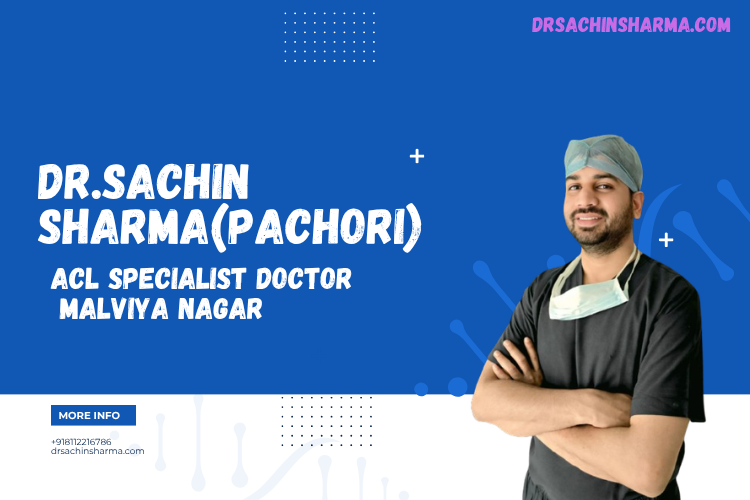
ACL specialist doctor Malviya Nagar
ACL Tear Treatment Without Surgery
An ACL tear can change the way the knee works and affect stability, movement, and everyday tasks. However, not every ACL tear needs surgery. Depending on the severity of the injury, activity level, age, knee stability, and recovery goals, some people can improve with careful non-surgical treatment. Therefore, choosing the right treatment after a proper evaluation is important. If you are looking for an ACL specialist doctor Malviya Nagar, Dr. Sachin Sharma (Pachori) can examine your knee and suggest a suitable treatment plan.
ACL Specialist Doctor Malviya Nagar – Who Can Avoid Surgery?
Some people with an ACL tear can recover without surgery. For example, patients with a partial tear may respond well to structured rehabilitation. Similarly, people who do not participate in high-impact sports may manage their symptoms with conservative treatment. In addition, patients with good knee stability and no major injury to other ligaments or the meniscus may benefit from non-surgical care.
However, an orthopedic evaluation remains essential before choosing this approach. A clinical examination and appropriate imaging can help determine the severity of the ACL injury. As a result, your doctor can recommend treatment according to your individual condition.
Physiotherapy for ACL Tear
Physiotherapy plays an important role in ACL tear recovery without surgery. First, a physiotherapist focuses on reducing pain and swelling while improving knee movement. After that, the rehabilitation plan can include muscle strengthening, balance training, and movement exercises.
Moreover, the exercises can be adjusted according to your strength, mobility, and knee stability. Regular physiotherapy can improve muscle control and help the knee perform everyday activities more comfortably. Therefore, following the rehabilitation plan consistently can support better progress.
Knee Braces
A suitable knee brace can provide additional support while walking or exercising. Furthermore, it may improve confidence by helping control unwanted knee movement. However, the right brace depends on the severity of the ACL injury and your activity level.
For this reason, patients should not choose a brace only because it looks comfortable or costs less. Instead, an orthopedic specialist can recommend the appropriate brace and explain how long you should use it.
Strengthening Exercises
Strong thigh and hip muscles can support knee function after an ACL injury. For instance, rehabilitation may include controlled squats, straight-leg raises, hamstring exercises, step-ups, and balance drills.
However, the exercise program should progress gradually. Performing advanced exercises too early may place additional stress on the injured knee. Therefore, professional guidance can make rehabilitation safer and more effective.
Activity Modification
During recovery, patients should avoid movements that involve sudden twisting, jumping, rapid direction changes, or excessive knee loading. Instead, controlled activities such as walking and cycling may be introduced according to the recovery stage.
As strength and stability improve, patients can gradually return to normal daily activities. Nevertheless, demanding sports require careful assessment before returning to them. Your specialist can guide you about the safest progression.
Recovery Timeline
Recovery without surgery varies from person to person. Generally, some patients may notice improvement within a few weeks, while others may require several months of rehabilitation. The timeline depends on the severity of the ACL tear, muscle strength, knee stability, and consistency with physiotherapy.
In addition, following activity restrictions and completing exercises regularly can support recovery. Ultimately, your orthopedic specialist can monitor your progress and modify the treatment plan when necessary.
FAQs
1. Can ACL heal without surgery?
Some partial ACL tears and stable injuries can improve with rehabilitation. However, a complete ACL tear may continue to cause knee instability, especially during sports that involve twisting or sudden changes in direction.
2. Is physiotherapy enough?
Physiotherapy can be enough for selected patients. However, an orthopedic evaluation should determine whether conservative treatment is suitable for your injury.
3. Which brace is best?
The best brace depends on the ACL injury, knee stability, and activity level. Therefore, a specialist should recommend the appropriate brace after examining your knee.
4. Can I play sports without surgery?
Some people can return to selected sports after successful rehabilitation. However, high-impact and pivoting sports require careful assessment because they can place significant stress on the ACL and knee.
5. How long is recovery?
Recovery can take several weeks to several months. Moreover, consistent rehabilitation, gradual activity progression, and regular follow-up can support a safer return to normal activities.
Consult Dr. Sachin Sharma (Pachori)
If you need an evaluation for an ACL injury, consult Dr. Sachin Sharma (Pachori) at near J K LONE HOSPITAL, Gangawal Park, Adarsh Nagar, Jaipur, Rajasthan 302004.
Mobile: 8112216786
For more information, you can visit Dr. Sachin Sharma (Pachori)’s website and follow his Instagram, Facebook, and YouTube channels. These platforms provide educational information about ACL tears, knee problems, sports injuries, and orthopedic care.