
ACL
What is the ACL?
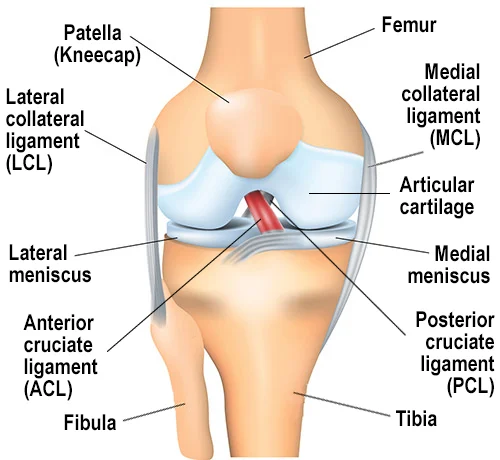
The ACL is a ligament located in the knee joint.
Basically, it connects the femur (thigh bone) to the tibia (shin bone) and plays a key role in maintaining stability.
In addition, this ligament supports movements such as jumping, pivoting, and sudden turns.
However, when it gets injured, even simple daily activities may become difficult.
Therefore, in such cases, consulting an ACL specialist in Jaipur is recommended for proper evaluation.
How is the ACL Injured?
Injuries to the ACL usually occur during high-impact or intense physical activities, especially in sports.
For example, several factors can lead to this type of injury, such as:
- Rapid slowing down or stopping suddenly
- Changing direction quickly while running
- Improper landing after a jump
- Moreover, physical contact or collision with another player
Risk Factors
Sports such as football, basketball, and kabaddi significantly increase the chances of an ACL injury.
In fact, activities that involve sudden stops or quick direction changes put extra stress on the knee.
Therefore, if you notice knee instability or discomfort, consult an ACL specialist in Jaipur as early as possible.
Signs and Symptoms
After an ACL injury, patients often feel intense pain along with swelling.
Typically, these symptoms appear soon after the injury.
Common signs include:
- A popping sound at the time of injury
- Rapid swelling in the knee joint
- Severe pain that limits movement
- A sensation that the knee may “give way”
- Weakness and instability
Moreover, do not ignore these symptoms and seek medical attention immediately.
Early diagnosis, therefore, helps prevent long-term complications.
Diagnosis & Evaluation
A precise diagnosis plays a crucial role in planning effective treatment.
Initially, the doctor performs a detailed physical examination.
If needed, the doctor recommends imaging tests such as MRI scans.
In addition, the doctor checks for associated injuries like meniscus or cartilage damage.
At our center, we create a personalized diagnostic plan and treatment strategy for every patient.
ACL Treatment Options
The treatment approach depends on the severity of the injury.
Generally, doctors choose between non-surgical and surgical options based on the patient’s condition.
Non-Surgical Treatment
In many cases, doctors recommend conservative care when:
- The ligament has a partial tear
- The patient maintains a low activity level
- The knee shows minimal instability
This approach usually includes:
- Guided physiotherapy sessions
- Knee braces for support
- Strength and balance exercises
- Lifestyle and activity modifications
Additionally, our team closely monitors every rehabilitation program to ensure safe and steady recovery.
Arthroscopic ACL Reconstruction
However, doctors recommend surgery in cases of complete ACL tears.
This procedure is called ACL reconstruction.
During the procedure:
- Surgeons use minimally invasive techniques
- Small incisions help speed up recovery
- The surgeon selects the graft based on patient needs
- Advanced fixation methods improve stability and results
After surgery, rehabilitation starts early.
As a result, patients gradually return to their normal activities.
ACL Recovery Timeline
The healing process follows different phases.
Initially, doctors focus on reducing pain and swelling.
Gradually, patients regain strength and mobility.
- Day 0–1: Patients start supported weight-bearing; doctors manage swelling
- Week 2–4: Knee movement improves; strengthening exercises begin
- Week 6–12: Patients increase balance and strength training; some may start light jogging
- Month 4–6: Patients begin sport-specific training and slowly return to sports
Finally, the doctor gives clearance only after a proper evaluation.
Why Choose Dr. Sachin Sharma (Pachori)
Choosing the right specialist plays a key role in recovery.
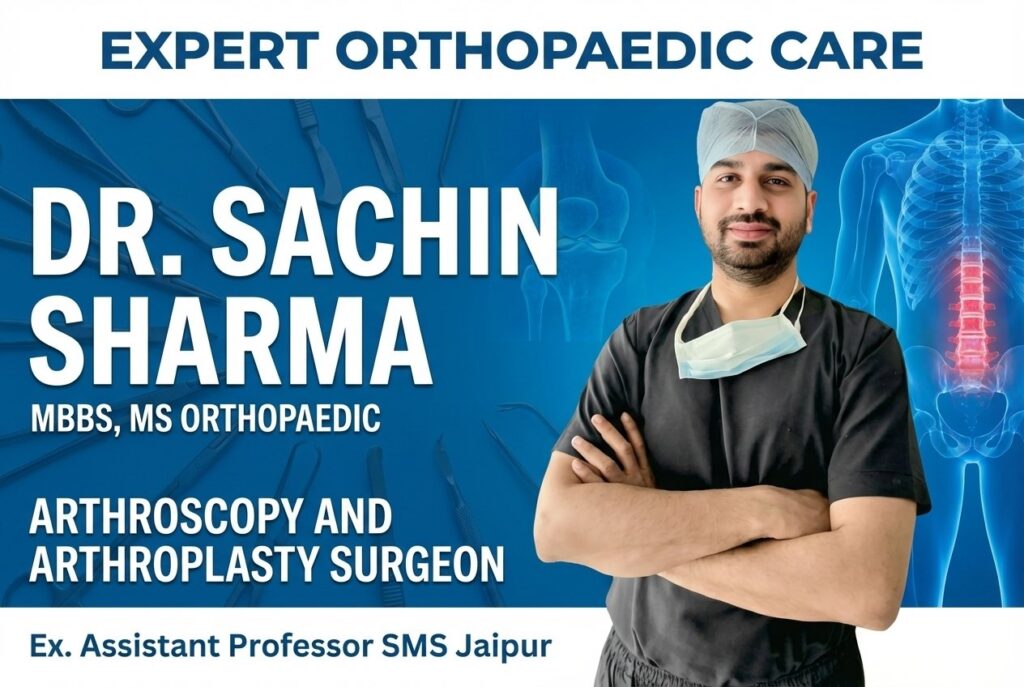
In this regard, Dr. Sachin Sharma (Pachori) offers:
- Expertise in arthroscopic procedures
- Customized surgical planning
- Modern operation theatre facilities
- Evidence-based treatment methods
- Structured rehabilitation protocols
- High success rates, especially among athletes
Conclusion
ACL injuries require timely diagnosis and expert care.
In conclusion, with the right treatment and guidance, patients can safely return to an active and healthy lifestyle.
FAQ
Is arthroscopic ACL better than open surgery?
Yes, keyhole (arthroscopic) approaches generally allow reduced pain, earlier motion and faster recovery — though long-term stability depends on correct technique and rehabilitation.
Which ACL graft is the best?
- Bone–Patellar Tendon–Bone (BPTB) – Best choice for competitive athletes.
- Hamstring Tendon (Semitendinosus ± Gracilis) – Best for general population & non-contact sports.
- Quadriceps Tendon (± Bone Plug) – Excellent alternative to BPTB.
- Allograft (Cadaver Graft) – Avoid in young athletes
Do all ACL tears need surgery?
No. Partial tears or low-activity lifestyles may be managed without surgery. But persistent instability or pivoting sports favour surgical reconstruction.
When can I return to sport after ACL reconstruction?
Return to sport (RTS) after ACL reconstruction is based on function, not just time.
Returning before 6 months → 2–4× higher re-injury risk
Young athletes (<25 yrs) have highest re-tear risk
Rehab quality matters more than graft type
Minimum 9 months for pivot sports
What about meniscus injury along with ACL?
If your MRI shows a meniscus tear along with ACL injury, we prioritise meniscus repair or preservation to protect knee cartilage and longevity.